Rounded shoulders, also known as rounded shoulders syndrome, are very common in the general population.
Poor exercise technique, driving, posture, long periods standing, desk work and excessive mobile phone use can all contribute to rounded shoulders.
Some people maintain correct shoulder blade positioning, but most adopt a rounded posture, with shoulders falling forwards and the neck constantly flexed.
Over time, this posture becomes a habit without us realising. The result is neck pain, shoulder dysfunction and injuries, headaches and disruption to the coordinated function of the spine.
These 6 quick, simple exercises and stretches can help ease pain and gradually improve your posture.
Side bending of the neck
Stretching the trapezius and scalene muscles of the neck plays an important role in ‘releasing’ the neck region and is the first important step in correcting rounded shoulders.

- Stand with your back straight and draw your shoulders back and down.
- Using your left hand, gently pull your head so that your left ear moves towards your left shoulder, as far as is tolerable.
- Repeat on the other side.
- Complete 2 sets, holding for 15–30 seconds on each side.
Doorway chest stretch
This stretch will open your chest, increase mobility in your upper body and even improve your breathing.
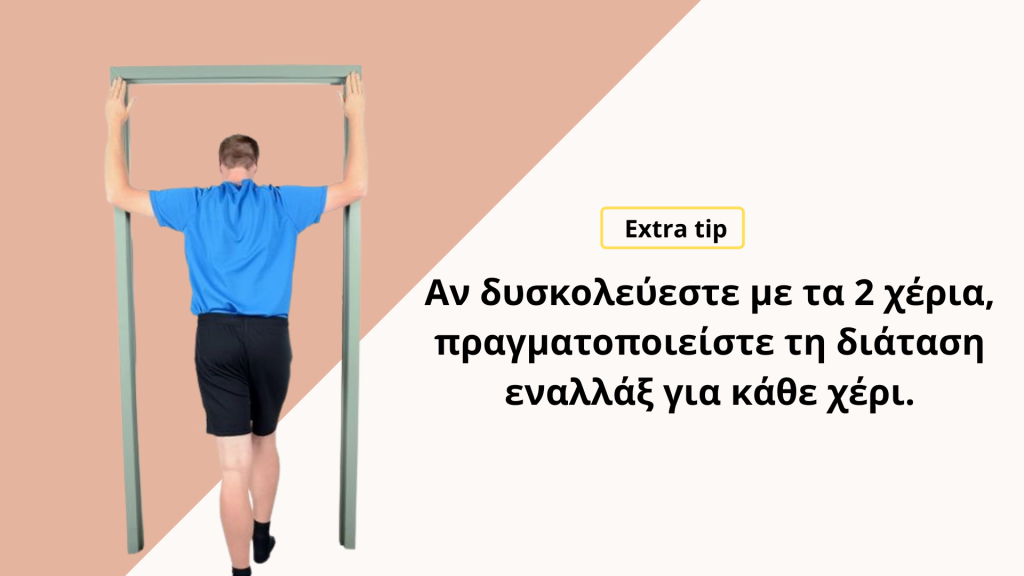
- Stand in the centre of a relatively narrow doorway.
- Position your upper arms slightly below shoulder level and bend your elbows to 90 degrees. Place your forearms against the door frame. If the doorway is wide, work one arm at a time.
- Take a step forward and feel the stretch in your chest. If you have room, move a little further until you feel a tolerable stretch.
- Hold for 15–30 seconds and repeat 3 times.
Behind-the-back shoulder stretch
This shoulder stretch opens the chest and takes the shoulder through a range of movement it is no longer used to.
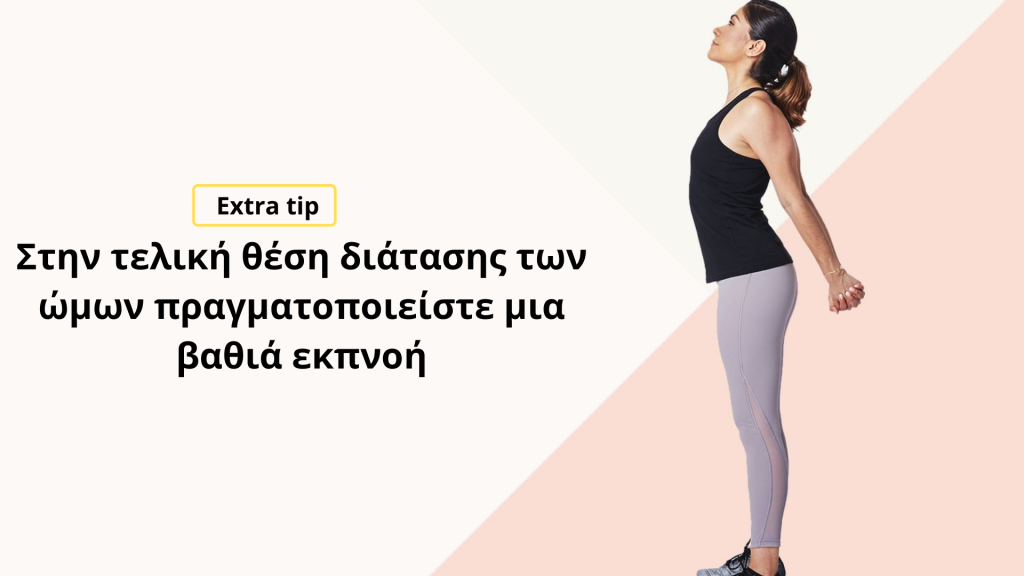
- Stand upright with your feet shoulder-width apart and look straight ahead into the distance. Clasp your hands behind your waist. Your thumbs should point towards the floor.
- Without bending forwards, and keeping your chest open, move your clasped hands towards the ceiling.
- Stop when you feel a stretch in your shoulders and biceps. Hold this position for 20–30 seconds.
- Release your hands, shake them out a little and repeat 3 times.
Prone I – T – Y raises
This exercise lengthens the small stabilising muscles around the shoulders and upper body, helping them work much more effectively.
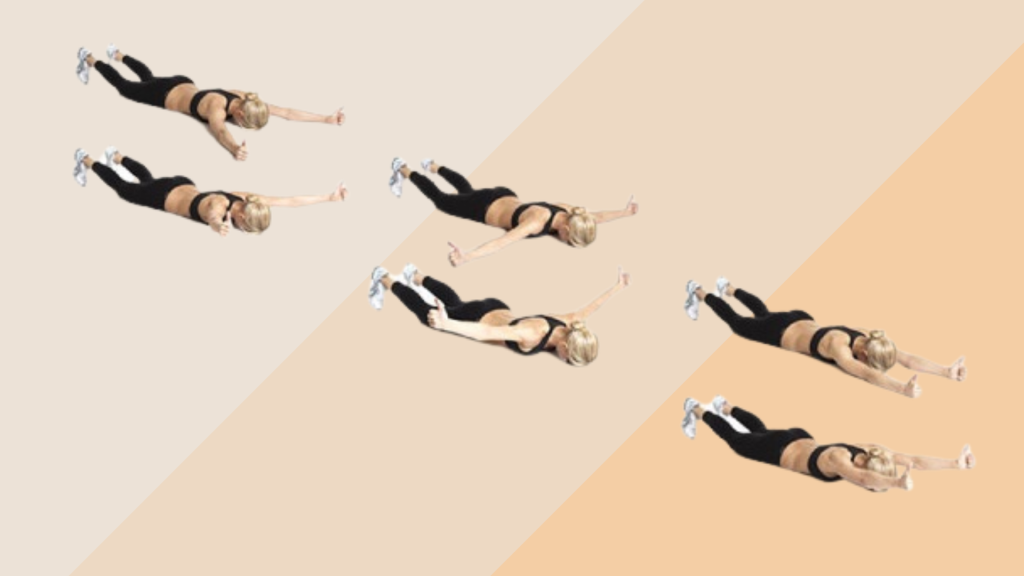
- Lie face down with your forehead resting on a mat on the floor and your arms alongside your body, thumbs pointing towards the floor. This is the I position.
- Move your arms away from your body to 45 degrees. In this position, the Y position, raise your arms towards the ceiling. Repeat 10 times.
- Move your arms so that they are in line with your shoulders. Rotate your arms so that your palms face the floor. This is the T position. Raise your arms towards the ceiling and repeat 10 times.
- Return to the I position and complete the entire exercise sequence 3 times.
Resistance band shoulder pull-apart.
This exercise strengthens your back so it can hold its position with less effort. Choose a medium- or high-resistance exercise band to suit your fitness level.
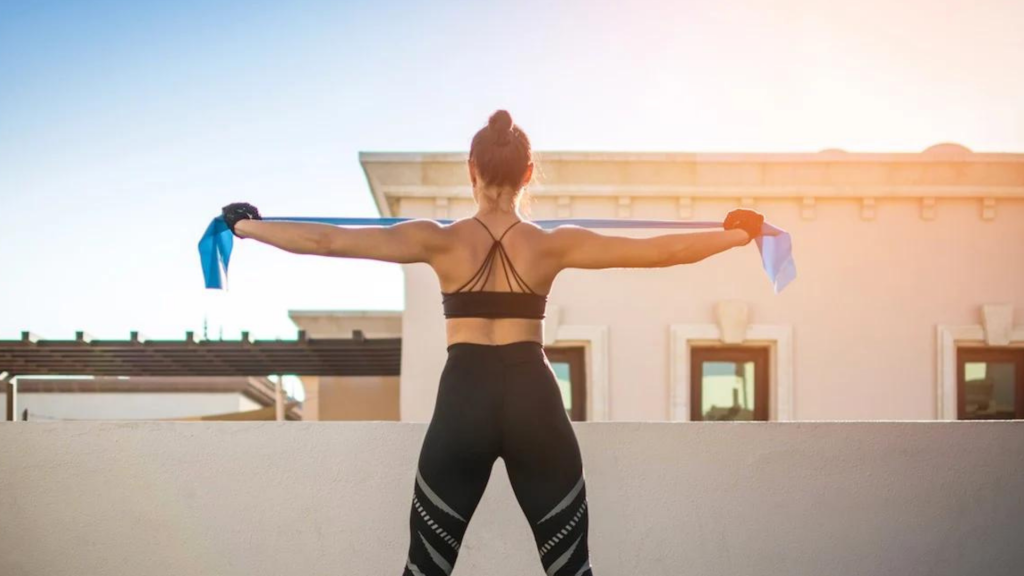
- Stand upright, flex your shoulders to 90 degrees and hold the 2 ends of the resistance band.
- Gradually move your hands apart, drawing your shoulder blades towards the centre of your back.
- Keep your shoulders in position and focus carefully on moving your shoulder blades.
- Return slowly and with control to the starting position, taking 5–7 seconds.
- 3 sets of 12 repetitions are sufficient.
Shoulder blade wall slides
This exercise strengthens the shoulders and retrains scapulothoracic rhythm: how the shoulder blades, shoulders and trunk work together during movement.
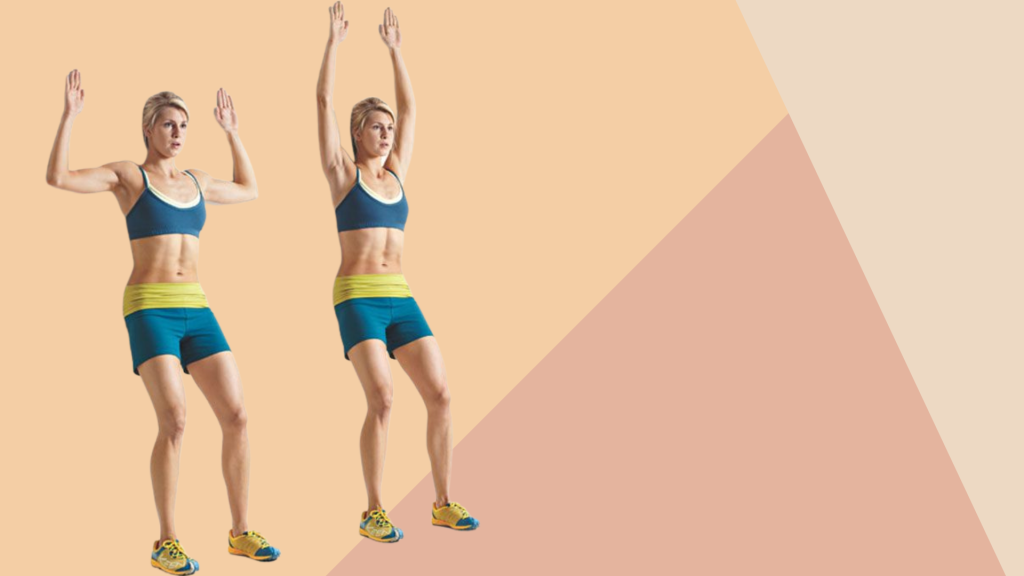
- Stand upright against a wall with your back flat against it. Raise your arms out to the sides to 90 degrees, with your elbows also bent to 90 degrees. In other words, form a T shape with your elbows bent to 90 degrees.
- Press your shoulders upwards without lifting your back or buttocks away from the wall. Move slowly, with your palms facing outwards.
- Continue until your elbows are straight or you reach your end position while maintaining correct posture.
- Pause in this position and return slowly. If this is too easy, use small dumbbells for resistance.
- Perform 15 repetitions for 3 sets.