Kinesio tape is the elastic cotton tape that a physiotherapist applies using a specific technique to areas of the musculoskeletal system where it is needed. The therapeutic effects are reduced pain, joint stabilisation and increased movement. Using a specific technique (thin-strip application), kinesio tape can also reduce oedema. How does kinesio tape work? The 4 mechanisms
The Effect of Kinesio tape on Pain
Every musculoskeletal injury is followed by inflammation and swelling in the area. A key feature of inflammation is the swelling of inflamed anatomical structures due to increased blood flow. This swelling reduces the space between the skin and muscle. This causes compression and activation of nociceptors, or pain receptors.
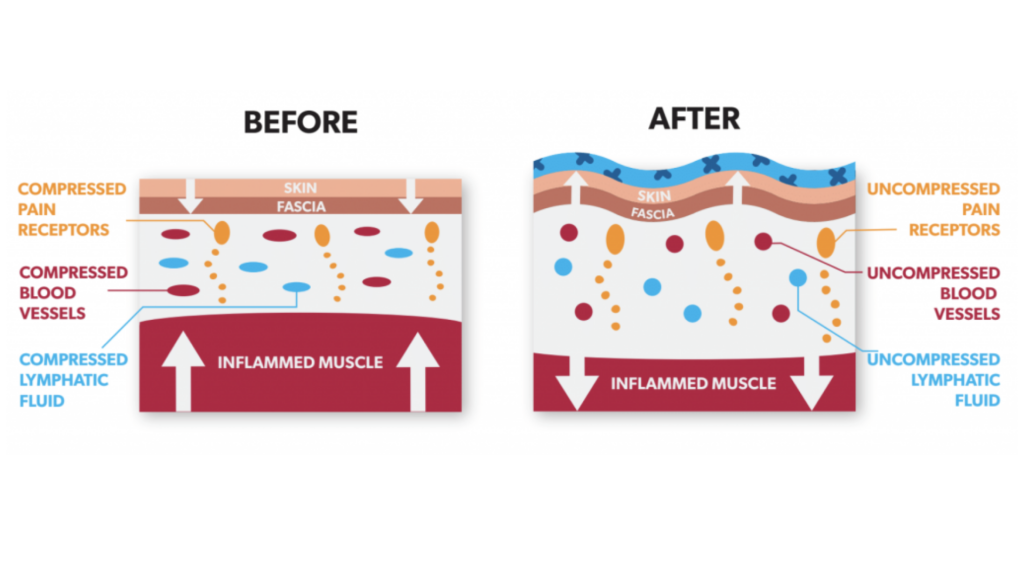
These receptors protect us. When they detect a change in pressure or temperature, they send a nerve impulse to the brain, producing the feeling of pain.
Kinesio tape is applied while the affected area and skin are stretched. As the area returns to its normal position, the kinesio tape forms folds.
These folds effectively lift the skin and create space between the muscle and skin.
As a result, the nociceptors are no longer compressed and stop sending impulses that activate pain.
In other words, pain is noticeably reduced.
Kinesio tape and proprioception
Sensors throughout the body tell us where we are in space, both at rest and in movement.
They also help us perceive the speed of movement.
These sensors are called proprioceptors.
By creating tension and stimulating the proprioceptors, kinesio tape provides timely information about the moving limb’s position in space, helping prevent re-injury.
The effect of kinesio tape on range of movement
The application of kinesio tape essentially follows the same principles as the familiar rigid stabilising tape.

With appropriate application, it can therefore help correct joint asymmetry and poor alignment.
This prevents biomechanical deviations that lead to overstretching of muscles and ligaments, ultimately allowing smoother movement with a greater range and fewer injuries and discomfort.
Kinesio tape and oedema
Kinesio tape also has an oedema-reducing effect.
As mentioned above, injury causes inflammation and compression of structures. These structures include the small lymphatic vessels.
When compressed, the lymphatic vessels cannot effectively remove inflammatory substances and ‘cellular waste’.

Oedema and swelling therefore linger and settle very slowly. Correctly applied kinesio tape can decompress the area and fully restore local lymphatic function, helping oedema resolve faster.
At TherapyLab, kinesio tape is applied by specialist physiotherapists in accordance with all recommended protocols.