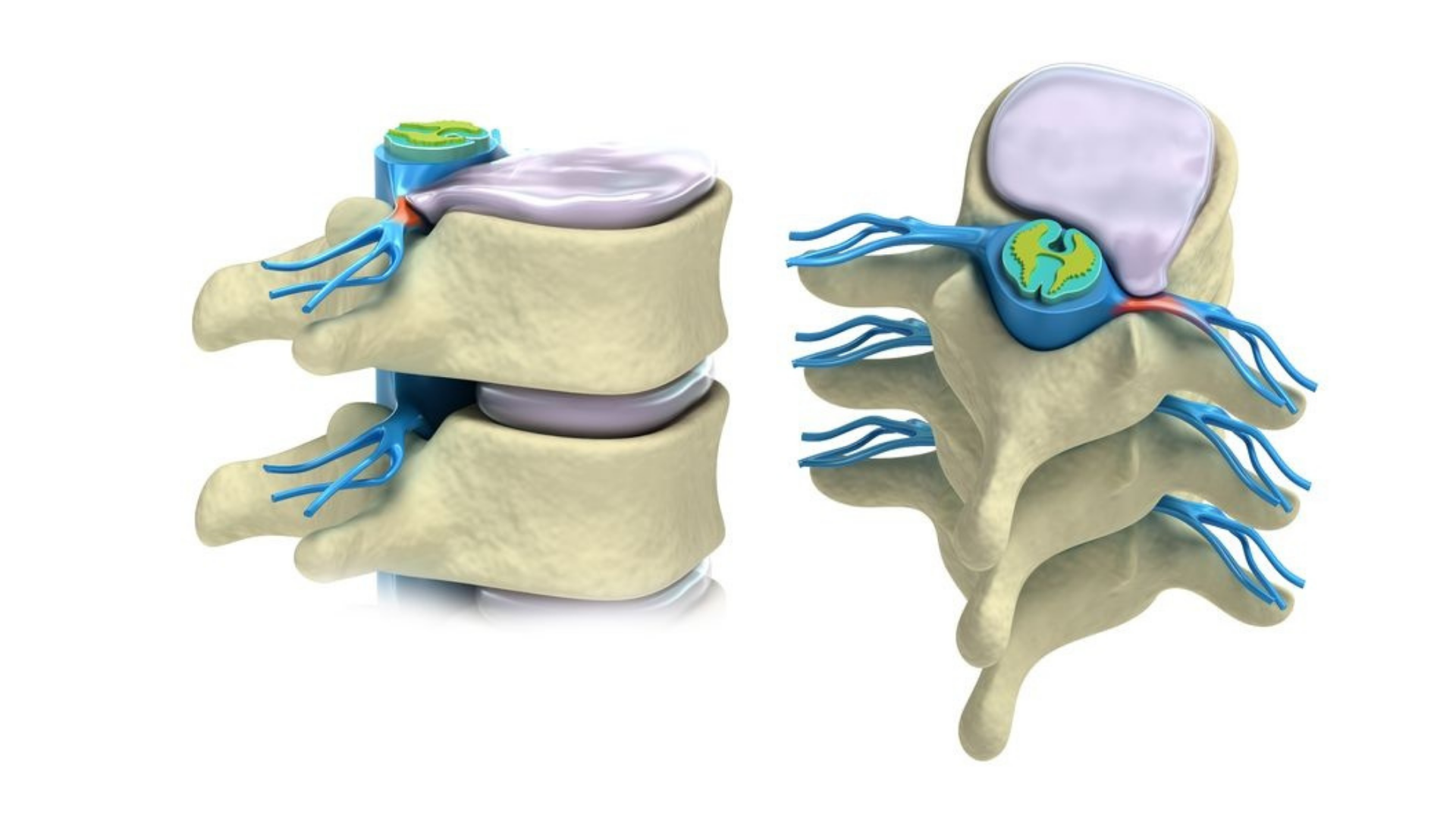
If you have a confirmed herniated disc, you have probably heard these myths. Here are the facts.
Myth #1 – Surgery is the only solution that can correct the problem
Surgery is a last resort and should only be an option when symptoms are extremely severe.
Most people with a herniated disc can return to normal, or almost normal, function with personalised physiotherapy, mobilisation, stretching and therapeutic exercise.
Myth #2 – Some therapists can put an intervertebral disc back in place
First, an intervertebral disc does not change position or risk slipping out of the spine.
A herniation is essentially a protrusion that develops in an intervertebral disc because of pressure on the fibrous ring surrounding it.
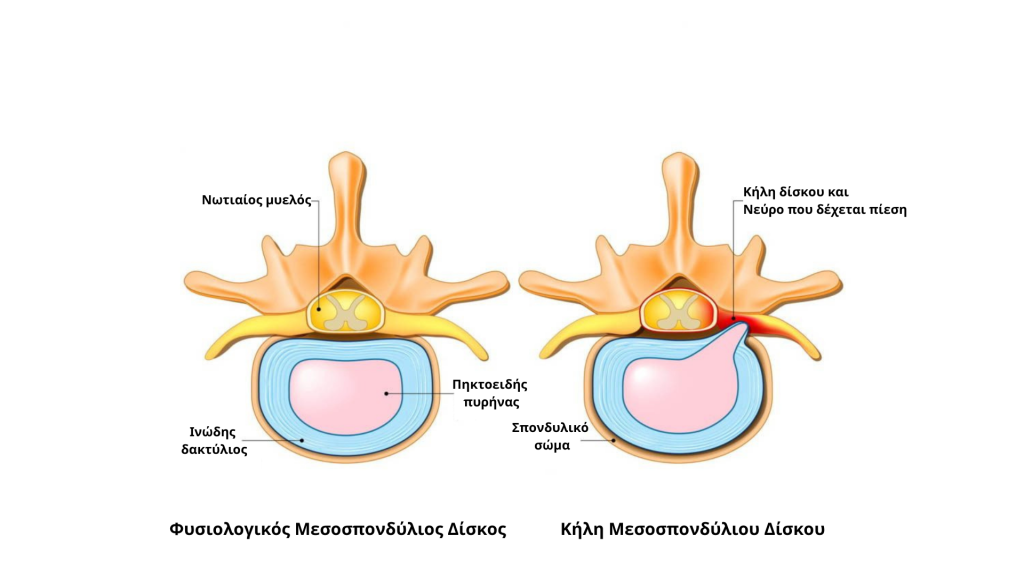
Even in this situation, however, there is no manipulation that can return the herniation to its previous state.
Physiotherapy techniques aim to move the herniation as far away from the nerves as possible and decompress the affected area so that the disc does not rupture.
Even during surgery, the treating doctor does not move the intervertebral disc but simply removes the protruding part of the herniation.
Myth #3 – A herniated disc is a permanent disability, and my life will change dramatically
A diagnosis of a herniated disc does not, on its own, tell you what you can do physically.
Many people have more than one herniated disc without any symptoms and only discover them by chance during imaging for something else.
Even when a herniation causes symptoms, effective treatment can help you return to full function.
Myth #4 – Vigorous movement and exercise are forbidden with a herniated disc
Movement is integral to modern physiotherapy for all musculoskeletal conditions, and a herniated disc is no exception.
Rest may ease symptoms in the medium term, but it will not help the problem in the long term.

The targeted movement, strengthening and mobilisation your physiotherapist prescribes are your strongest tools for returning to normal life.
Widespread myths in the age of the internet and social media
Online, information travels around the world in fractions of a second.
It is not always reliable. False or unreliable medical information can lead to harmful beliefs and misguided decisions about your life.
If you have a herniated disc or are concerned about your lower back, visit one of TherapyLab’s specialist physiotherapy clinics. We will answer your questions and concerns with clear scientific reasoning.