Trigger points – what are they?
Trigger points, also known as myofascial pain trigger points, are small, localised painful areas within a muscle or near the musculotendinous junction.
They are anatomical changes in small sections of muscle, where the muscle fibres stay contracted and shorter than their normal length.
How are trigger points activated?
These painful points usually already exist in an inactive state and develop after an injury or sudden muscle contraction.
Muscle overuse, repetitive movement or re-injury can activate a trigger point.
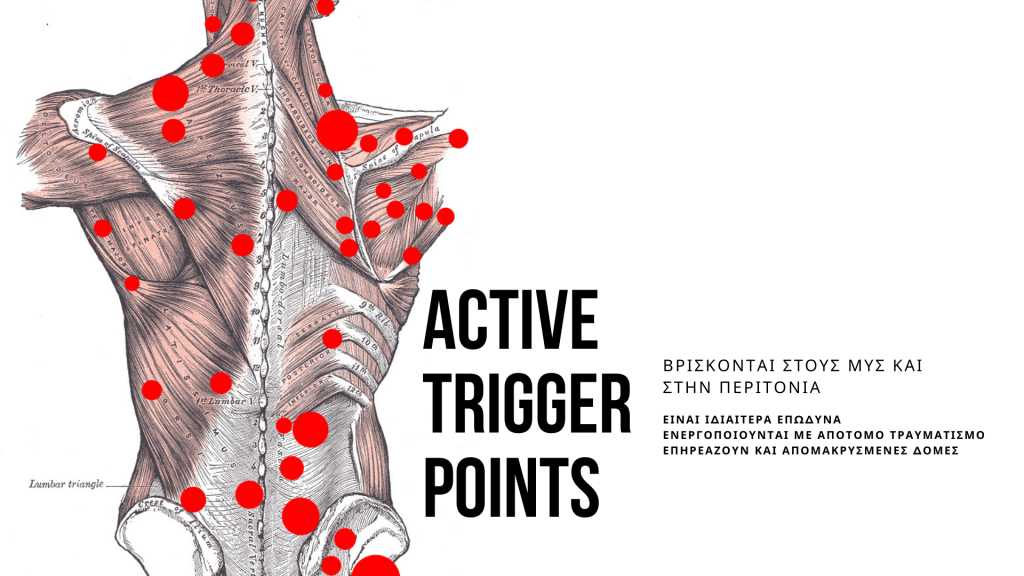
A cycle develops: sudden contraction reduces oxygen and nutrient supply, impairs recovery and leads to trigger point formation and further contraction. The resulting symptoms can be extremely painful and last for days or months.
Trigger points and referred pain
Fascia is a sheet of connective tissue that runs throughout the body and covers the muscular system.
Trigger points often affect the fascia as well as the muscle involved.
Because the fascia forms a single anatomical entity, symptoms may appear in one area even though a trigger point nearby is the cause.
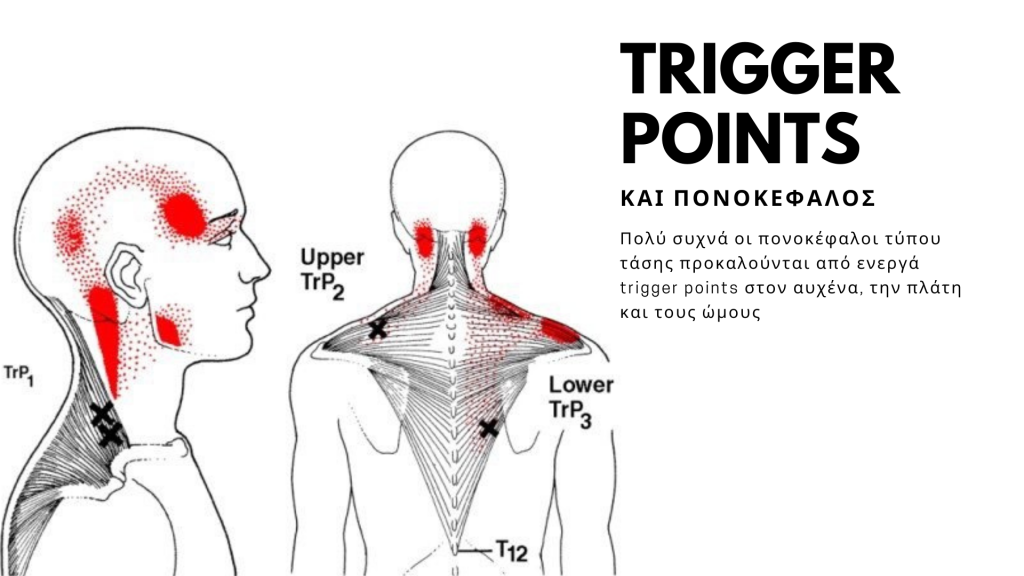
A typical example is a headache caused by trigger points in the neck region or the trapezius muscle.
You may have noticed that pressing a painful trigger point can send symptoms into nearby areas.
Trigger points and treatment
Treatment for trigger points has the following goals:
- Improving blood circulation in the area
- Stretching and restoring the length of muscle fibres
- Managing and releasing the fascia in the area
The methods a therapist will typically use include manual pressure, deep tissue massage, dry needling, fascial mobilisation, the IASTM technique and targeted stretches.