Lateral elbow epicondylitis is a common condition in everyday clinical practice.
The joint’s position and use, together with the strong tensile forces from the powerful muscles around it, often lead to injury in the tendons attached to the lateral epicondyle of the elbow — the bony prominence on the outside of your elbow.
Having helped hundreds of patients recover fully from elbow epicondylitis, we have heard many of the same questions.
Here are the 6 we hear most often.
Why is elbow epicondylitis also called tennis elbow?
Lateral epicondylitis is widely known as tennis elbow, meaning tendinitis in tennis players.
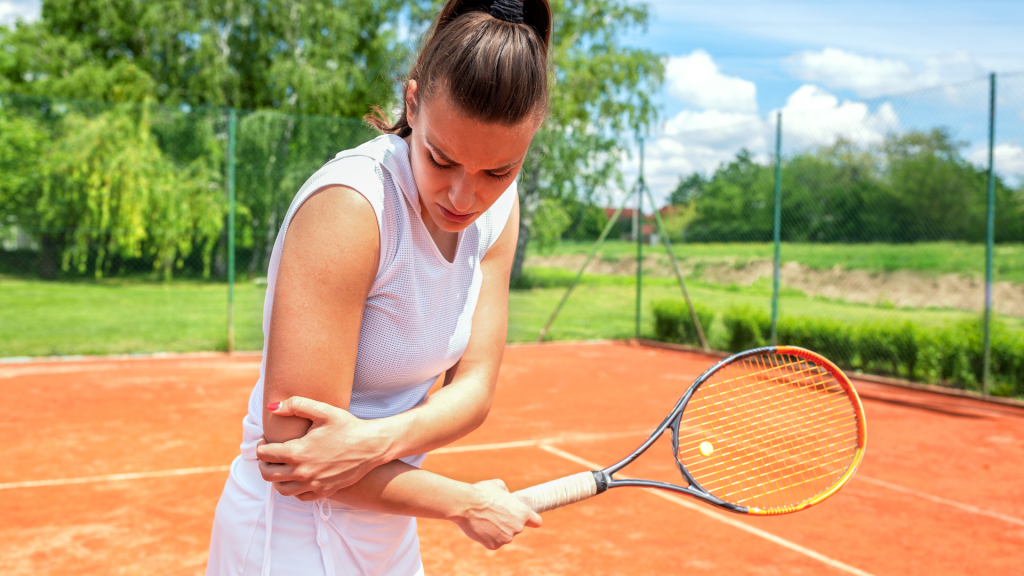
The name comes from the way the pain is reproduced most intensely: holding a weight and making the movement a tennis player uses to return the ball.
It is also by far the most common injury among tennis players.
Will physiotherapy help with my problem?
Modern physiotherapy has 2 major tools for managing and fully curing elbow epicondylitis.
Firstly, physical modalities relieve pain and significantly accelerate healing, using modern devices such as Tecar.
Secondly, detailed movement analysis, biomechanical and ergonomic assessment, and targeted exercise help resolve the problem and prevent reinjury.
Physiotherapy is the primary conservative and effective treatment for tennis elbow.
How long does elbow epicondylitis take to develop?
In most cases, tennis elbow develops quite gradually and only in the arm we use most.
At first, the discomfort is manageable and a simple painkiller settles the symptoms. That gradual onset can be misleading: people carry on at the same pace, with the same poor ergonomics.
The injury follows chronic strain. Once dysfunction has developed, changes alone can no longer resolve it without physiotherapy. Less often, elbow epicondylitis follows an acute injury that has not been fully rehabilitated.
Can I treat elbow epicondylitis without surgery?
Absolutely! Physiotherapy will achieve a complete and lasting cure without the need for surgery in 95% of cases.
In some cases, your doctor may need to perform a minor procedure or a local corticosteroid injection, but this should be a necessary last resort.
How long will rehabilitation for tennis elbow take?
Like any tendinitis, tennis elbow takes time to recover fully. Tendons have a poor blood supply, and their attachment sites are exposed to high tensile forces.
Full recovery takes 3–6 months, depending on how closely you follow the treatment plan, the extent of injury, your age, occupation and other factors.
Within 10–14 days of starting treatment, however, pain will be much reduced and everyday function noticeably better.

What can I do between physiotherapy sessions?
- Avoid movements that reproduce your symptoms at all costs.
- Follow your physiotherapist’s instructions closely. They will give you a clear plan for movements, loading and alternative ergonomic options.
- Ice therapy. Apply ice locally 2–3 times a day for 15 minutes, or whenever you feel you have placed excessive strain on the area.
- Change your daily ergonomics at work or your sporting technique.
- If necessary, take anti-inflammatory medication / painkillers according to your doctor’s instructions.
- Massage the area to improve blood flow to the injured tissue. Avoid sleeping on the injured limb.